

I noticed the pattern almost by accident a few years ago, scrolling back through old bank statements while doing something unrelated. My grocery total, month over month, dipped every September, without me consciously changing how I shopped or trying to spend less. It wasn't a coupon strategy or a new budgeting app. It took me a while to realize what was actually happening: the produce section itself was doing the work, shifting into a season where more of what's genuinely in-demand also happens to be cheap, and my meals were following that shift without me planning it that way on purpose.
Once I understood the mechanism, I started leaning into it deliberately instead of accidentally, and the September dip got bigger and more reliable. Here's what's actually going on, and how to plan around it instead of just benefiting from it by luck.
The Basic Mechanism
Produce pricing follows supply far more directly than most grocery categories, because unlike packaged goods, fresh produce can't be stockpiled or evenly distributed across a full year at a stable cost. When a crop is in peak regional harvest, supply floods in, and stores price it aggressively both because their own cost is lower and because they're competing to move a perishable product before it spoils. When a crop is out of season and being shipped in from far away or grown in controlled conditions, both the store's cost and the shelf price climb.
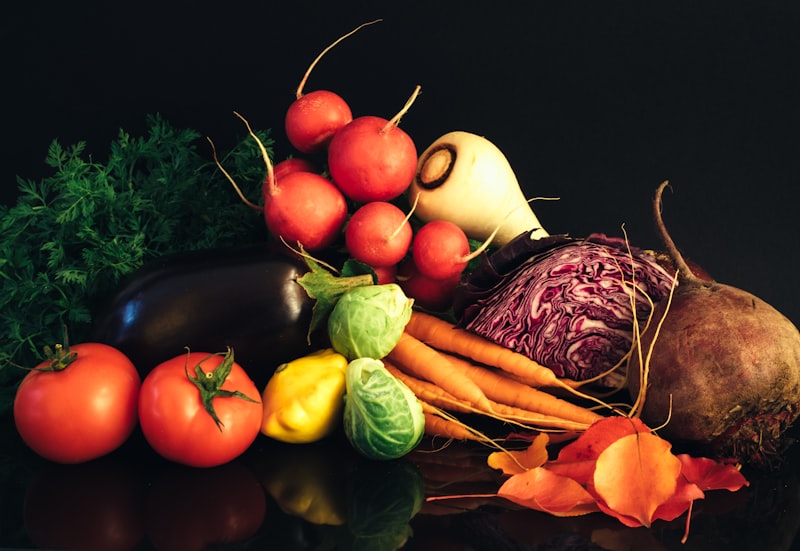
September sits at a genuinely good intersection for a lot of the country. Late-summer crops like tomatoes, corn, peppers, and stone fruit are often still winding down and cheap. At the same time, early fall crops — apples, winter squash varieties, certain greens, root vegetables — are just coming into season and priced attractively as stores push the new harvest. For a few weeks, you get overlap: the tail end of one cheap season and the front end of another, stacked on top of each other.
Why This Doesn't Require Any Extra Effort to Benefit From
The reason this shows up on a bill without deliberate planning is that most people's meals already skew toward whatever produce looks good and fresh in the store that week, even if they're not thinking about it as a strategy. Tomatoes that look vibrant and are priced low get bought more; a squash that looks dull and overpriced doesn't. Shoppers are already responding to the price-and-quality signal without realizing it, which means a chunk of the September savings happens passively.
Where it stops being passive and becomes a real, larger savings is when you shift from responding to what's cheap to planning around what's cheap — building the week's meals starting from what's in peak season rather than starting from a recipe and then paying whatever the specific ingredients happen to cost that week.
How I Actually Plan Around It Now
Instead of picking recipes first, I look at what's genuinely abundant that week — which in September usually means a mix of the last tomatoes and peppers alongside the first apples and squash — and build two or three meals around whichever of those has the best price-to-quality ratio that particular week. A big-batch roasted vegetable dish using whatever squash is cheapest, a simple tomato-and-pepper pasta sauce made and frozen in batches while tomatoes are still winding down, and a slaw or salad built around whatever greens are in season.
The batch-and-freeze part matters more than people give it credit for. Tomato sauce made in September when tomatoes are cheap and frozen in portions gets you through months of higher-priced tomatoes later in the year at a fraction of the cost, effectively locking in the September price for meals you'll eat in December. This is the same logic as buying something on sale and stocking up, just applied to fresh produce via freezing instead of a pantry shelf.
What Doesn't Follow the Same Pattern
It's worth being clear about the limits here, because not every grocery category moves with produce seasonality. Meat, dairy, and packaged goods have their own separate pricing cycles tied to different factors — feed costs, processing, promotional calendars — and don't reliably dip in September the way produce does. If your grocery bill isn't dropping at all in September, it's worth checking whether produce is actually a meaningful share of your basket, or whether meat and packaged goods are dominating the total and masking the seasonal produce savings underneath.
Regional variation matters too. What's in peak harvest in September differs meaningfully depending on where you live and where your grocery store sources from, so the specific items driving the dip for someone in the Pacific Northwest won't be identical to someone in the Southeast. The underlying principle — that overlapping harvest seasons create a temporary price sweet spot — holds pretty broadly, but the specific shopping list to chase should be based on what's actually cheap at your own store that week, not a generic list copied from somewhere else.
The Bigger Habit Worth Building
The real shift for me wasn't learning that September happens to be a good month. It was learning to plan meals starting from price and season rather than starting from a recipe and accepting whatever the ingredients cost. September just happens to be the month where that habit pays off most visibly, because two good seasons overlap for a few weeks. But the same approach — building the week around what's currently abundant rather than what a recipe demands — quietly saves money in some form every month of the year, once you get used to shopping that way instead of shopping from a fixed list.